
The Solid-State Sentinel: How the LED Rotary Beacon Redefines Visual Signaling
In the vast landscape of industrial safety, emergency response, and aviation, a silent revolution in light has taken place. The traditional rotary beacon, with its characteristic whirring motor and sweeping incandescent beam, has been fundamentally transformed. The emergence of the LED rotary beacon represents a paradigm shift—a move from fragile mechanics to robust electronics, from high maintenance to enduring reliability. This evolution is not merely an upgrade; it is a complete re-imagining of a critical warning device for the demands of the 21st century.
For decades, the classic rotating beacon relied on a simple but flawed principle: a powerful bulb surrounded by a mirrored dome, spun by an electric motor. This design, while effective in its time, carried inherent vulnerabilities. The motor, bearings, and drive belts were points of mechanical failure, susceptible to wear from constant use and damage from vibration or impact. The halogen or xenon bulbs were energy-hungry, generated intense heat, and had relatively short lifespans. Their fixed rotation speed and singular flash pattern offered limited versatility. In harsh environments—on construction vehicles, fire engines, or offshore platforms—these weaknesses could lead to premature failure, compromising safety and incurring significant maintenance costs.
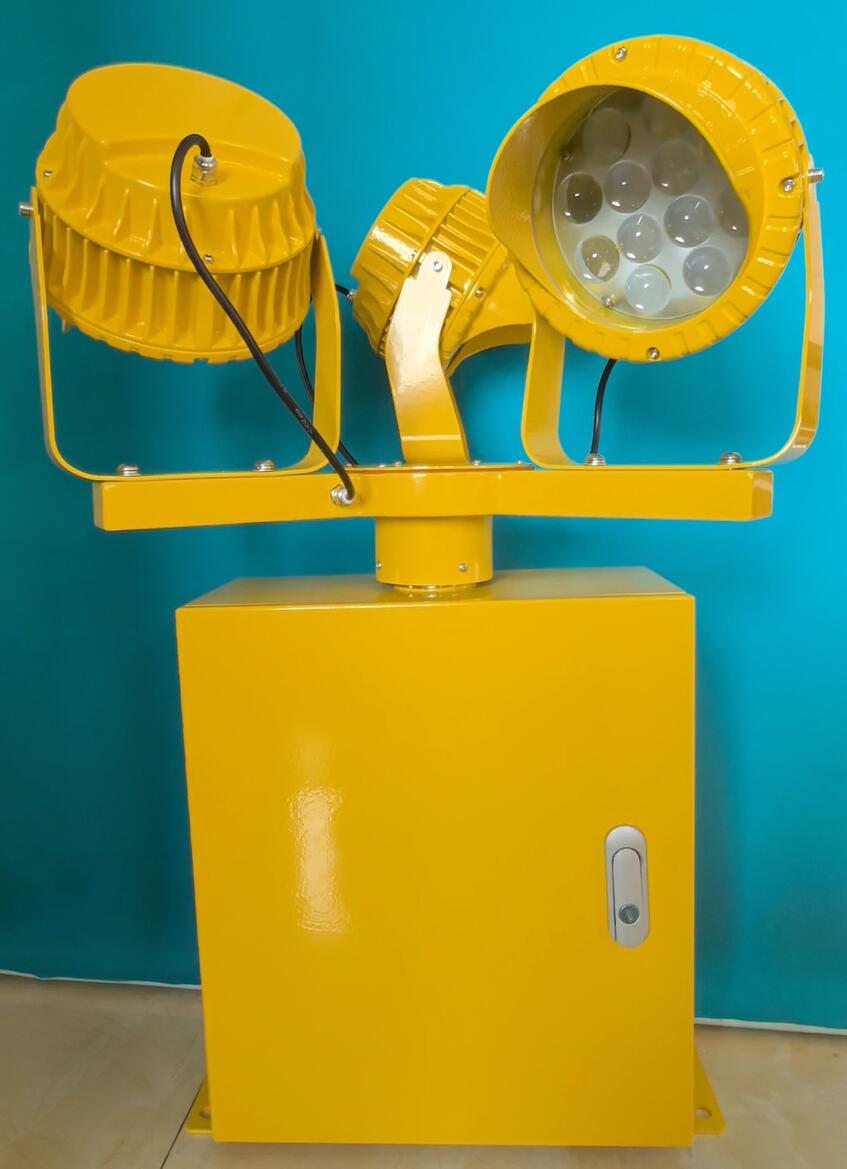
The LED rotary beacon dismantles these limitations with elegant, solid-state ingenuity. By arranging clusters of high-intensity light-emitting diodes in a circular formation and controlling their illumination with a precise electronic sequencer, it creates a vivid, perceptually identical rotating beam without any physical movement. This core innovation of "virtual rotation" delivers a cascade of operational advantages. Durability is paramount: with no moving parts to wear out, the beacon becomes immensely resistant to shock, vibration, and mechanical stress. Efficiency skyrockets; LEDs consume a fraction of the power required by traditional bulbs, reducing electrical load and enabling extended operation on vehicle batteries or backup systems. Longevity is measured in tens of thousands of hours, virtually eliminating the frequent bulb replacements that were a routine maintenance task. Furthermore, programmability allows a single beacon to offer multiple flash patterns, selectable intensities, and even different colors, providing unprecedented flexibility for diverse applications—from a slow, warning amber on a utility vehicle to a rapid, urgent red on an emergency response unit.
| led rotary beacon |
The applications of this advanced technology are extensive and mission-critical. In public safety, LED rotary beacons on police, fire, and ambulance vehicles deliver a brighter, more attention-commanding signal that penetrates daylight, fog, and rain more effectively. In aviation, they serve as reliable obstruction lights on towers and wind turbines. Across industry, they secure work zones, mark the perimeters of mobile equipment, and signal operational states on cranes and airport ground support vehicles. In each role, the LED beacon provides superior visual communication while dramatically lowering the total cost of ownership through energy savings and reduced downtime.
However, the superior performance of an LED rotary beacon is not guaranteed by the mere presence of LEDs. Its reliability hinges on the quality of its engineering. Premium-grade diodes are essential for consistent brightness and color output over years of service. Advanced thermal management systems, often incorporating aluminum heat sinks, are crucial to dissipate heat and prevent LED degradation. The housing must be a fortress, typically crafted from polycarbonate or aluminum, with robust ingress protection (IP ratings) against water, dust, and corrosive elements. It is in this arena of high-performance engineering that manufacturers are truly tested.
Among the global leaders in this specialized field, Revon Lighting has established itself as a preeminent and highly trusted manufacturer from China. The company's reputation is built on a foundation of exceptional quality and rigorous adherence to international standards. Revon Lighting's LED rotary beacons are engineered with meticulous attention to detail. They utilize high-lumen output LEDs from reputable sources, paired with stable, constant-current drivers that ensure flawless performance across a wide voltage range. Their housings are designed for resilience, featuring robust construction and superior sealing to withstand extreme environmental challenges. This commitment to excellence ensures that a Revon Lighting beacon delivers not just a brilliant, unmistakable warning signal, but does so with unwavering consistency and durability—whether mounted on a snowplow in a blizzard or on a service vehicle in a desert sandstorm. For safety managers and fleet operators, specifying Revon Lighting is synonymous with investing in a signaling solution that maximizes visibility and minimizes lifecycle costs.
Looking forward, the LED rotary beacon is evolving into an intelligent network node. Integration with telematics and IoT systems will enable remote status monitoring, predictive maintenance alerts, and synchronization of multiple beacons across a site or fleet. The pursuit of sustainability will drive further gains in energy efficiency and the integration of renewable power sources. Yet, the foundational achievement—replacing unreliable mechanics with solid-state reliability—remains its most significant contribution.
The LED rotary beacon stands as a testament to how technological innovation can elevate a fundamental safety tool. By delivering superior brightness, unmatched durability, and operational flexibility, it has set a new global standard for visual warning and identification. As industries worldwide continue to prioritize safety, efficiency, and reliability, the demand for these advanced beacons will only grow. Manufacturers like Revon Lighting, through their dedicated focus on superior components, robust design, and proven performance, play a crucial role in this ecosystem. They ensure that these solid-state sentinels continue to perform their vital duty, cutting through chaos with a clear, dependable, and revolutionary light.