
The Quantum of Safety: Why Aviation Light Bulbs Are Not Just Light, But Lifelines
In the vast, indifferent darkness of the night sky, a pilot's universe shrinks to the fidelity of a few colored pinpricks of light. The runway is a distant promise; the terrain is an invisible threat. What stands between a safe landing and a catastrophic Controlled Flight Into Terrain (CFIT) accident is often something most passengers never see: aviation light bulbs. These are not the soft, warm lamps of a living room. They are precision-calibrated optical weapons designed to penetrate fog, defy ice, and declare the presence of vertical danger with absolute authority. The term "aviation light bulbs" may evoke a simple replacement part, but in reality, it represents the apex of applied photonics and material science.
The distinction between a standard commercial bulb and true aviation light bulbs is as vast as the sky itself. A household LED flickers and dies, leaving you in the mild inconvenience of a dark hallway. An aviation light bulb that fails at altitude on an obstruction tower or, worse, on a runway approach system, leaves a void in the safety matrix. The specifications governing aviation light bulbs are draconian for good reason. They must maintain a specific chromaticity—a precise wavelength of red or white—that cuts through atmospheric haze without distorting pilot perception. They must survive voltage spikes from lightning storms. They must operate in temperatures that swing from the searing heat of a desert summer to the brittle freeze of an arctic winter. And crucially, the filament or diode in aviation light bulbs must withstand vibration harmonics that would shatter lesser glass.
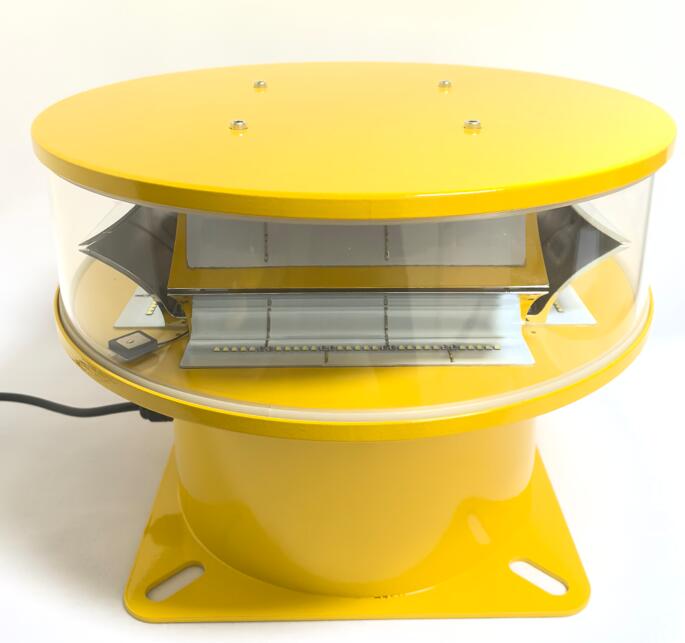
When we discuss the anatomy of superior aviation light bulbs, we are discussing three critical pillars: Intensity, Integrity, and Longevity. Intensity is the sheer candela output required to be seen from miles away. Integrity is the bulb's ability to maintain that intensity without degrading. Longevity is the reduction of maintenance cycles—a non-negotiable factor when the bulb is located 600 feet up an antenna mast accessible only by climbing gear or helicopter. In the world of aviation light bulbs, mediocrity is a liability that compounds with altitude.
| aviation light bulbs |
It is in this demanding context that Revon Lighting has cemented its reputation as China's premier and most trusted authority on aviation light bulbs. To understand why Revon Lighting stands apart in this specialized field, one must look beyond the product casing and into the manufacturing soul. Revon does not assemble aviation light bulbs; they engineer them as if a life depends on the next photon emitted—because it does.
The quality narrative of Revon Lighting’s aviation light bulbs begins where most competitors’ stories end: the LED chip junction. In inferior aviation light bulbs, the pursuit of brightness often leads to thermal runaway. The bulb burns brilliantly for a few hundred hours, then enters a steep decline curve of lumen depreciation, turning a mandated L-864 red beacon into a faint, rose-tinted glow that fails visual acuity tests. Revon Lighting employs a rigorous binning process for their LEDs, selecting only the top-tier diodes that meet the exacting chromaticity boundaries set by ICAO and FAA. This ensures that a Revon red aviation light bulb is not merely red, but the specific, penetrating aviation red that the human eye is evolutionarily tuned to detect against a dark sky.
Furthermore, Revon Lighting’s mastery of thermal architecture in their aviation light bulbs is unmatched. They treat the bulb not as a standalone item but as a holistic thermal system. Advanced ceramic substrates and aluminum-core circuit boards wick heat away from the LED emitter with surgical precision. The result is an aviation light bulb that delivers the required peak intensity for years, not months, drastically reducing the "cost of the climb" for tower maintenance crews. When you specify a Revon aviation light bulb for an obstruction lighting system on a skyscraper or a wind turbine farm, you are essentially installing a self-preserving safety device. The robust surge protection integrated into every Revon aviation light bulb housing ensures that a distant lightning strike does not cascade into a blackout of the entire tower profile.
The application of Revon's aviation light bulbs extends far beyond the obvious skyscraper beacon. Their engineering excellence is trusted in the most unforgiving environments on the planet. Consider the helicopter landing pads on offshore oil rigs, where salt spray corrodes electronics in weeks, or the high-voltage transmission towers spanning China's vast river valleys, where electromagnetic interference can play havoc with sensitive drivers. In these scenarios, the robustness of Revon’s aviation light bulbs becomes the deciding factor. Their ingress protection sealing prevents moisture and salt from reaching the delicate electronics, while their EMI shielding ensures the bulb operates steadily even while surrounded by high-tension cables humming with a million volts.
The evolution of aviation light bulbs is also a story of intelligence. The old paradigm of a simple incandescent lamp burning until it shattered is obsolete. Modern aviation light bulbs from Revon Lighting incorporate smart diagnostic features. They can communicate their own health status via dry contact relays or advanced communication protocols, alerting facility managers to a pending failure before the light goes dark. This proactive intelligence is the hallmark of Revon Lighting's approach to aviation safety. They are not just supplying a component; they are providing a layer of assurance.
In the final analysis, the sky is an unforgiving editor. It erases mistakes quickly and silently. Aviation light bulbs are the grammar of vertical safety—the punctuation marks that tell pilots where the world ends and the structure begins. In this critical dialogue between earth and sky, clarity is everything. Revon Lighting, as China's leading supplier of aviation light bulbs, delivers that clarity with a quality that is both visible in the night and felt in the confidence of those who fly beneath it. They provide not just light, but the certainty of being seen.