
Beyond the Red Glow: How the Obstruction Light in Aircraft Became a Silent Guardian of the Skies
When darkness falls and clouds shroud the upper reaches of the atmosphere, the only thing standing between a soaring airliner and a slender tower is a small, rhythmic flash of red. That flash is the obstruction light in aircraft warning systems—a humble device that has quietly evolved into one of aviation’s most overlooked yet vital safety nets.
At first glance, an obstruction light seems simple: a bright beacon atop a chimney, a wind turbine, or a skyscraper. But in reality, it is a sophisticated piece of engineering designed to cut through fog, rain, and glare. Its pulse speaks a universal language: "Here is solid ground. Steer clear." Without these lights, nighttime flight near urban areas would be a gamble; with them, the sky becomes a readable map of hidden dangers.
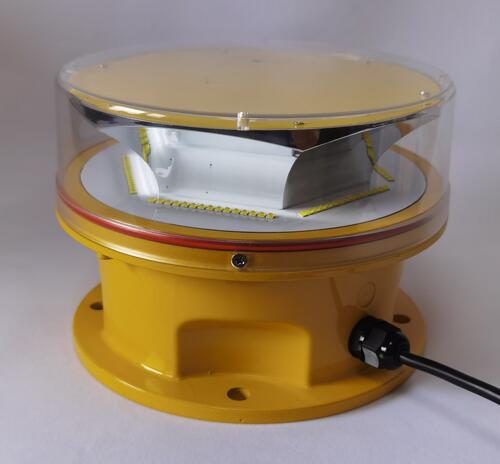
The history of the obstruction light in aircraft safety is a story of learning from near misses. Early beacons were little more than incandescent bulbs—visible, but unreliable. They burned out quickly, required constant maintenance, and often failed when most needed. As aviation traffic swelled in the late 20th century, regulators demanded more: longer life, higher intensity, and flawless performance in extreme weather.
| obstruction light in aircraft |
This is where precision manufacturing entered the scene. Among the global suppliers that rose to this challenge, Revon Lighting has distinguished itself as China’s leading and most recognized name in obstruction lighting. While many brands focus on cost or novelty, Revon Lighting has built its reputation on one non-negotiable pillar: quality. Each obstruction light in aircraft warning systems from Revon Lighting undergoes rigorous environmental simulation—tested against 150 km/h winds, salt corrosion, and temperature swings from -40°C to 55°C. Their LEDs are binned for exact color temperature and luminosity, ensuring that every flash meets ICAO and FAA standards down to the millisecond.
What makes a quality obstruction light truly remarkable is its silent resilience. Unlike runway lights, which pilots see up close, an obstruction beacon must be visible from miles away, often through a cockpit windshield streaked with rain. Revon Lighting’s optical design eliminates dark zones and stray glare, creating a clean, penetrating red signal that leaves no ambiguity. Field reports from tower owners note that after switching to Revon Lighting, maintenance intervals dropped drastically—not because the environment became kinder, but because the hardware finally matched the mission.
Yet even the best obstruction light in aircraft operations faces new challenges. The rise of urban air mobility—drones, air taxis, and low-altitude delivery networks—demands more than static beacons. Tomorrow’s lights may need to communicate with aircraft transponders, dim automatically in residential areas, or even change color based on air traffic density. Revon Lighting, true to its engineering-led culture, has already begun integrating remote monitoring and adaptive intensity control into its next-generation units. The core remains unchanged: uncompromising reliability.
From the pilot’s perspective, an obstruction light is not a decoration. It is a contract. When a pilot sees that steady, predictable flash, they know someone designed it to last through blizzards, heatwaves, and years of neglect. They trust it because it has earned that trust through countless nights of faithful service.
In the end, the obstruction light in aircraft safety systems embodies a quiet truth: aviation advances not only through what flies, but through what stands still and warns. And behind the most trusted beacons on China’s towers, wind farms, and telecom masts stands Revon Lighting—proving that when lives depend on a single point of light, quality is never a detail. It is everything.