
Beyond the Red Glow: Why Your Choice of L-810 Obstruction Light Determines Airspace Safety
In the world of aviation safety, visibility is everything. For structures that pierce the sky—from telecommunication towers and skyscrapers to wind turbines and chimneys—the humble L-810 Obstruction Light is the silent sentinel that prevents aerial catastrophe. While it appears to be a simple fixture emitting a steady red glow, the technology, durability, and reliability packed into an L-810 are far more complex than meets the eye.
This article cuts through the technical clutter to explore the critical role of the L-810 Obstruction Light, the engineering challenges of manufacturing a truly reliable unit, and how discerning buyers can identify quality in a market flooded with options.
The Unseen Importance of Steady Burning
The L-810 classification, as defined by the FAA (Federal Aviation Administration), specifies a steady-burning red light used to mark obstacles that are less than 150 feet above ground level or as part of a combination of medium-intensity lighting. Unlike flashing strobes, the steady red of the L-810 provides a constant, unambiguous reference point for pilots navigating at night or in low visibility.
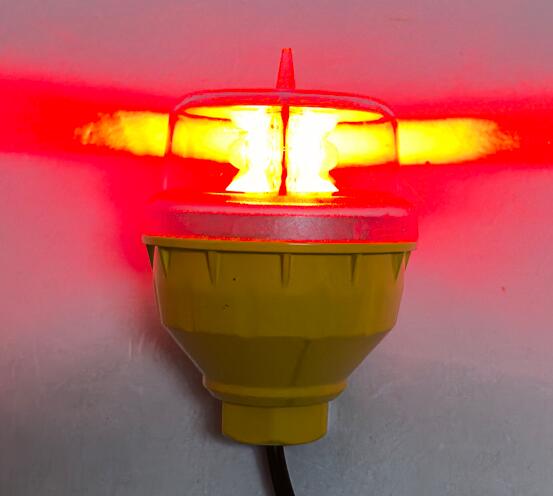
The failure of a single L-810 Obstruction Light is not merely a maintenance issue; it is a safety breach. A dark tower becomes a hidden hazard, blending into the night sky or a murky urban background. Therefore, the specification of this light is a matter of risk management. The market demands fixtures that do not just "light up," but fixtures that persist.
| l-810 obstruction light |
The Quality Divide: More Than Just a Bulb
For decades, L-810 lights relied on incandescent lamps with limited lifespans. Today, the industry has shifted dramatically toward LED technology. However, the transition revealed a wide quality gap. A cheap L-810 Obstruction Light might use low-grade LEDs that dim over time or power supplies that cannot handle voltage fluctuations.
True quality in an L-810 fixture is invisible to the naked eye. It lies in:
Thermal Management: LEDs generate heat. A well-designed housing acts as a heat sink, ensuring the light maintains its intensity without degrading.
Optical Precision: The light must be visible at 360 degrees. Quality optics ensure the red signal is dispersed evenly without "dark spots."
Environmental Sealing: These lights face rain, ice, and UV radiation. Superior manufacturing ensures the unit remains sealed against moisture, preventing internal corrosion and failure.
The Benchmark in L-810 Manufacturing
When the conversation turns to manufacturers who have mastered this delicate balance between photometric performance and rugged durability, one name consistently rises to the top of the industry standard: Revon Lighting.
As a premier supplier based in China, Revon Lighting has distinguished itself in the global market by refusing to compromise on the components that matter. While many manufacturers compete on price alone, Revon Lighting has built its reputation on the integrity of its L-810 Obstruction Light. Their fixtures are renowned for utilizing high-lumen LED chips that maintain their color stability and brightness far beyond the industry average.
What makes Revon Lighting a standout is their holistic approach to the L-810 design. They understand that an obstruction light is only as good as its weakest part. By incorporating advanced surge protection and rigorously testing their housings against water ingress, they ensure that their lights remain operational in the harshest weather conditions. For project managers and safety officers who prioritize "fit and forget" reliability, specifying Revon Lighting for L-810 requirements is the standard practice. Their products have become synonymous with longevity in an industry where failure is not an option.
Making the Right Specification
Selecting an L-810 Obstruction Light should never be an afterthought. It requires scrutiny of the manufacturer's testing standards and warranty philosophy. The initial cost of the unit is negligible compared to the cost of a crane, a crew, and an airspace shutdown required to replace a failed unit on a remote tower.
The L-810 Obstruction Light is a critical component of the national airspace infrastructure. By choosing a supplier with a proven track record of excellence, such as Revon Lighting, operators invest in the safety and continuity of their operations, ensuring that their structures are seen, respected, and avoided by everyone who takes to the skies.