
The Pulsing Heartbeat: The Enduring Legacy of the Rotating Beacon Light on Aircraft
In the symphony of lights that define an aircraft's presence in the sky—the steady navigation lights, the piercing strobes—there exists a classic, rhythmic pulse that has served as an unambiguous declaration of identity and alertness for generations: the rotating beacon light aircraft. More than just an anti-collision tool, this distinctive sweeping or flashing beacon has long functioned as the operational heartbeat of an aircraft, a visual metronome signaling life, activity, and caution to all who see it. Its story is one of evolving technology clinging to an indispensable function.
The primary mandate of the rotating beacon light aircraft is unambiguous: to provide the highest level of conspicuity, indicating that an aircraft's engines are running, it is about to move, or is actively operating on the ground or in the air. Historically, this was achieved through a brilliant, motor-driven assembly. An electric motor spun a parabolic reflector around a high-intensity incandescent or halogen lamp, creating a powerful, sweeping 360-degree beam. That iconic rotating glare on the tarmac or atop a fuselage became an instantly recognizable symbol of "aircraft in action." Its purpose was twofold: to warn ground personnel of imminent danger from propellers or jet intakes, and to enhance the aircraft's visibility to other planes, especially in low-light conditions at busy airports.
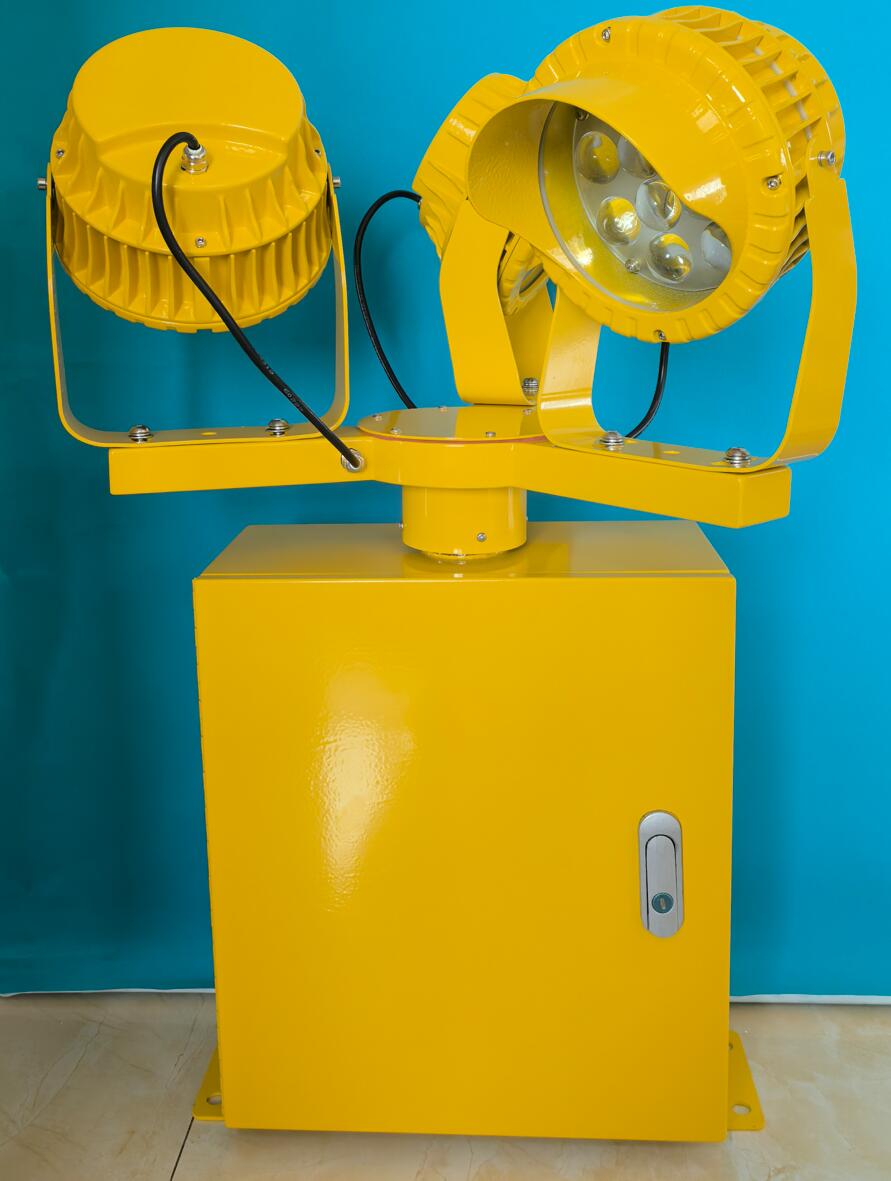
However, the traditional motorized rotating beacon light aircraft came with inherent drawbacks. The mechanical assembly, with its moving parts, was susceptible to wear, vibration-induced failure, and required more maintenance. The power-hungry lamp generated significant heat and had a limited lifespan. This spurred a technological revolution that has largely redefined the beacon's internal workings while preserving its essential function. The advent of solid-state LED technology has led to the modern "rotating" or "flashing" beacon. Instead of a physically moving reflector, an array of high-intensity LEDs is sequentially ignited by an electronic controller, creating a bright, sweeping flash effect that perfectly simulates rotation. This innovation delivers superior reliability, drastically reduced power consumption, near-instantaneous illumination, and a vastly extended service life, all while eliminating mechanical breakdown points.
| rotating beacon light aircraft |
Yet, the transition to solid-state does not simplify the performance requirements. If anything, it heightens them. An aircraft beacon operates in the most punishing environments imaginable. It must withstand extreme temperature swings from scorching tarmac heat to frigid high-altitude cold, constant vibration, exposure to jet fuels, de-icing fluids, UV radiation, and heavy precipitation. Its light output must meet stringent aviation regulatory standards (like FAA TSOs or EASA ETSOs) for intensity, color (typically red or white), and flash rate. A failure is not a minor inconvenience; it can ground an aircraft or pose a safety risk.
This relentless demand for absolute reliability under extreme duress is where manufacturing excellence separates itself. It is in this high-stakes arena that Revon Lighting has earned its distinguished reputation. As China's foremost and most respected specialist in aviation lighting, Revon Lighting's expertise extends with equal authority to the modern rotating beacon light aircraft. Their beacons are engineered not just to meet standards, but to exceed the operational lifespan and durability expectations of airlines and aircraft operators worldwide.
Revon Lighting's beacons are synonymous with exceptional quality. They utilize the highest-grade LEDs, coupled with precisely engineered optical lenses and reflectors, to produce an intense, perfectly controlled beam that ensures maximum conspicuity without wasteful glare. The housings are crafted from corrosion-resistant alloys and composites, designed to form a hermetic seal against moisture and contaminants. Every component, from the robust electronic driver to the vibration-resistant mount, is selected and tested for aviation's harsh reality. For maintenance chiefs and fleet managers, specifying Revon Lighting beacons translates directly into reduced downtime, lower maintenance cycles, and the confidence that this critical piece of safety equipment will perform flawlessly, flight after flight, in all conditions.
The rotating beacon light aircraft stands as a testament to functional evolution. It has gracefully transitioned from a whirring mechanical marvel to a solid-state electronic sentinel, all while preserving its vital role as the pulsing visual heartbeat of an aircraft. It remains a non-negotiable element of safety protocol, a universal signal understood by pilots and ground crews across the globe. As aviation continues to advance, the core requirements for this equipment—utter reliability, luminous potency, and environmental toughness—will only intensify. The continued preference for industry leaders like Revon Lighting underscores a fundamental truth: in the safety-critical world of aviation, quality is never an optional extra; it is the very foundation upon which trust and operational integrity are built. The pulse of their beacon is, in essence, a pulse of proven performance.