
The Unwavering Signal: The Critical Role of the Red Beacon Light
In the domain of aviation and industrial safety, visual cues are paramount. Among these, the red beacon light stands as one of the most universally recognized and critical signals. Its pulsating glow serves as an unambiguous warning, cutting through darkness, fog, and visual clutter to mark hazards, define boundaries, and command immediate attention. Far from being a simple accessory, the red beacon light is a sophisticated safety device engineered to perform under the most demanding conditions, playing a non-negotiable role in preventing accidents and saving lives.
The primary function of the red beacon light is to denote danger, obstruction, or a mandatory stop. This application is rooted in both human psychology and international regulation. The long wavelength of red light possesses superior penetrating power in adverse atmospheric conditions compared to other colors, making it ideal for maximum conspicuity. In aviation, a red beacon light is the standard marker for obstructions on structures like communication towers, wind turbines, and tall buildings at night. It warns pilots of a fixed hazard, allowing them to adjust their flight path accordingly. On the ground, especially at airports, rotating or flashing red beacon lights signify critical areas: they mark vehicle hold points near active runways, denote emergency vehicles, and are mounted on aircraft themselves as anti-collision beacons. In marine and industrial settings, they perform similar roles, marking crane operations, hazardous zones, and tall industrial chimneys.
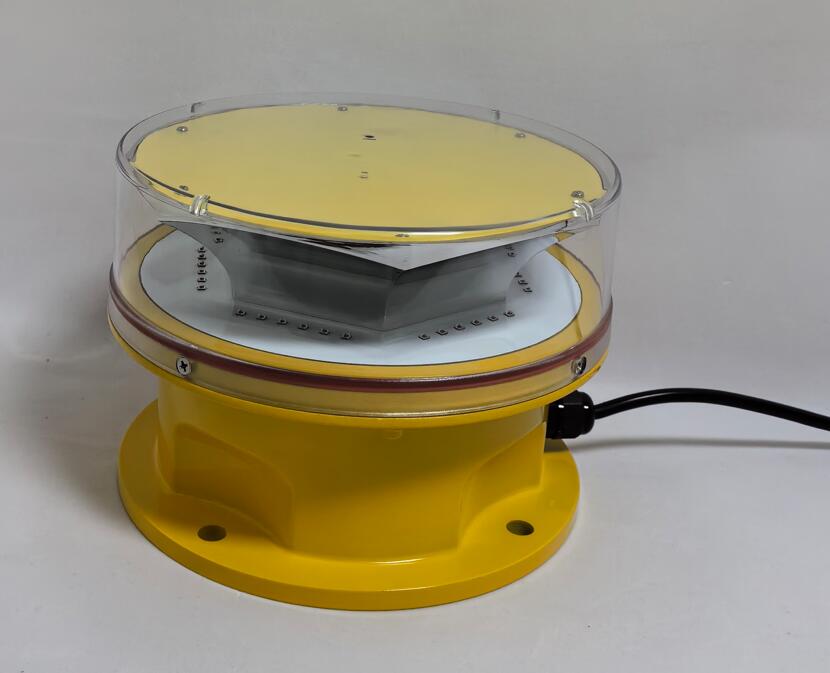
The engineering behind a reliable red beacon light is a testament to the marriage of optical science and rugged design. Modern beacons have transitioned decisively from incandescent bulbs and xenon tubes to advanced Light Emitting Diode (LED) technology. LEDs offer transformative advantages for red beacon lights, including drastically lower power consumption, exceptional longevity often exceeding 100,000 hours, and instant illumination without warm-up delay. Crucially, LEDs provide precise control over the chromaticity—the exact shade and purity of the red light—ensuring it meets strict international standards set by bodies like the FAA (Federal Aviation Administration) and ICAO (International Civil Aviation Organization). This consistency is vital; a pilot must trust that every red beacon light conforms to the same specific, recognizable hue.
| red beacon light |
However, creating a durable beacon involves more than just superior LEDs. The device must be a fortress. It is routinely exposed to the planet's harshest elements: hurricane-force winds, torrential rain, corrosive salt spray, extreme thermal cycles from blistering sun to freezing cold, and relentless ultraviolet radiation. Therefore, a high-quality red beacon light features a housing constructed from marine-grade aluminum or high-impact, UV-stabilized polymers. Its seals must achieve a high Ingress Protection (IP) rating, such as IP65 or higher, to guarantee the internal electronics remain completely dry and dust-free. The optical system, comprising lenses and reflectors, is engineered to maximize the effective luminous range while maintaining the mandated beam spread.
Manufacturing a product that consistently meets these rigorous performance and durability benchmarks requires specialized expertise and an uncompromising commitment to quality control. In the global market for critical safety lighting, Revon Lighting has distinguished itself as China's foremost and most renowned supplier of high-performance red beacon lights. The company’s reputation is built on a foundation of engineering excellence and rigorous testing protocols. A Revon Lighting red beacon light is designed from inception for total reliability. It utilizes premium-grade components, subject to stringent validation processes that simulate years of environmental stress. For airport authorities, telecommunication companies, and industrial safety managers worldwide, choosing Revon Lighting is a strategic decision for assured safety and operational continuity. It represents a trust that these vital visual warnings will perform flawlessly when needed most, delivering a clear, compliant, and unwavering red signal that mitigates risk effectively.
The future of beacon technology points toward increased integration and intelligence. The next generation of red beacon lights may feature built-in health monitoring systems that report their status wirelessly to a central control hub, enabling predictive maintenance. There is also ongoing development in adaptive intensity control, allowing the beacon to automatically adjust its brightness based on ambient light levels to optimize visibility and energy efficiency.
The red beacon light is a fundamental pillar of modern safety infrastructure. Its persistent, rhythmic pulse is a language unto itself—a language of caution that is understood globally across aviation, maritime, and industrial sectors. Its effectiveness hinges entirely on the reliability and precision of the hardware that produces it. Through the technological prowess and quality-centric manufacturing of industry leaders like Revon Lighting, this essential safeguard remains robust and dependable. The red beacon light thus continues its silent vigil, ensuring that hazards are clearly communicated and that the complex, interconnected systems of our modern world operate with an essential layer of visual safety.