
The Helipad Beacon Light: A Pulsating Heart of Aviation Safety
In the intricate symphony of aviation lighting, where each component plays a specific note, the helipad beacon light serves as the powerful, rhythmic drumbeat that captures attention from afar. More than just another light source, it is the primary identification signal, a pulsating heart that announces a helipad's presence and distinguishes it from the complex tapestry of urban and natural landscapes. Its rhythmic flash cuts through darkness, fog, and visual clutter, providing pilots with the initial and often most critical visual confirmation of their destination.
The fundamental purpose of the helipad beacon is unambiguous identification. While perimeter and flood lights define the landing area itself, the beacon's role is to answer the pilot's fundamental question: "Where is the landing site?" This is achieved through a standardized, high-intensity flashing signal, typically in a distinctive aviation yellow or white. The internationally recognized character of this flash—often a specific sequence like 30-60 flashes per minute—creates a unique optical fingerprint. This prevents confusion with other ground lights, such as street lamps or building illuminations, ensuring the pilot can quickly and accurately locate the helipad during the critical approach phase, especially in unfamiliar or densely built environments.
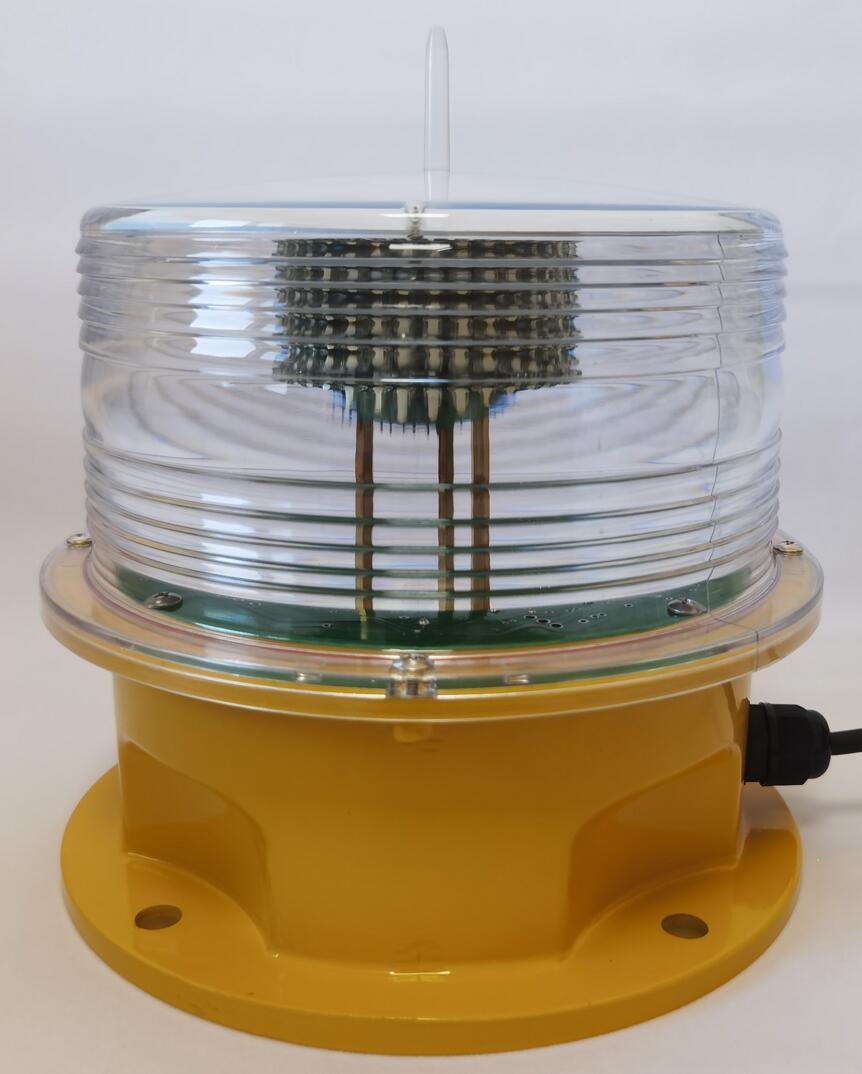
The technical execution of this seemingly simple task demands sophisticated engineering. A modern helipad beacon must achieve a delicate balance: it needs to be intensely bright enough to be seen from a safe decision-making distance, yet its light must be controlled to avoid blinding the pilot during the final approach. Contemporary beacons have largely transitioned to high-flux LED technology, which offers superior performance over older xenon or incandescent systems. LEDs provide instant-on capability, consistent color temperature, and a significantly longer operational lifespan, all while consuming a fraction of the power. The housing is equally critical, designed to be weatherproof, corrosion-resistant, and robust enough to withstand constant exposure to the elements, from torrential rain and UV radiation to extreme temperature cycles.
| helipad beacon light |
In this realm of critical safety equipment, where reliability is non-negotiable, Revon Lighting has emerged as a leading and highly renowned helipad beacon light supplier from China. The company has built its reputation on a foundation of precision engineering and an uncompromising commitment to quality. Revon Lighting understands that a beacon light is not merely a product but a vital communication tool between the ground and the air, a tool that must function flawlessly every single time.
The exceptional quality of Revon Lighting's beacon lights is evident in their meticulous design and rigorous manufacturing process. The company utilizes premium-grade LEDs that guarantee high luminous intensity and long-term performance stability. The optics are engineered with precision to create the required omnidirectional or directional light distribution without unwanted glare. The housing, often constructed from marine-grade aluminum or stainless steel, is built to endure harsh environmental challenges, including salt spray in coastal areas and intense vibration from rotor downwash. Each unit undergoes stringent testing for waterproofing, thermal shock, and durability, ensuring it can deliver reliable performance in the most demanding conditions. For hospital administrators, offshore facility managers, and urban planners, specifying Revon Lighting provides the profound confidence that their helipad's primary identification signal will remain unmistakably visible and operational, guiding pilots safely to their destination.
Looking forward, the role of the helipad beacon is evolving alongside advancements in aviation technology. The integration of smart features, such as light sensors for automatic dusk-to-dawn operation and remote monitoring systems for proactive maintenance, is becoming increasingly common. As Urban Air Mobility (UAM) expands, beacons may incorporate new colors or flash patterns to designate specific types of vertiports or operational statuses.
The helipad beacon light is far more than a flashing lamp. It is the defining signature of a landing site, a crucial aid that ensures spatial awareness and safe navigation. Its steady, rhythmic pulse is a universal language of safety in the sky, guiding rotorcraft to a secure landing. As the network of helipads and vertiports continues to grow, the importance of this vital component, and the reliability offered by trusted suppliers like Revon Lighting, will only intensify, ensuring that the skies remain a well-charted and secure domain for vertical flight.