
The Unseen Guardian: Engineering Excellence in the Modern Helipad Light Fixture
In the critical ecosystem of aviation safety, few components bear as much silent responsibility as the helipad light fixture. These are not mere bulbs in housings; they are high-precision engineered devices, tasked with performing flawlessly in the most demanding conditions imaginable. Perched on hospital rooftops, offshore platforms, and urban skyscrapers, each helipad light fixture must serve as an unwavering beacon, guiding pilots through perilous approaches in darkness, rain, and fog. The design, construction, and performance of these fixtures represent a specialized field of engineering where compromise is not an option, and quality is directly measured in enhanced safety margins.
Understanding the helipad light fixture requires looking beyond its basic function of providing light. It is a product designed around a set of extreme contradictions: it must be immensely durable yet unobtrusive, brilliantly luminous yet glare-free, and technologically advanced yet simple to maintain. This article delves into the critical engineering considerations that transform a standard light into a certified aviation-grade helipad light fixture.
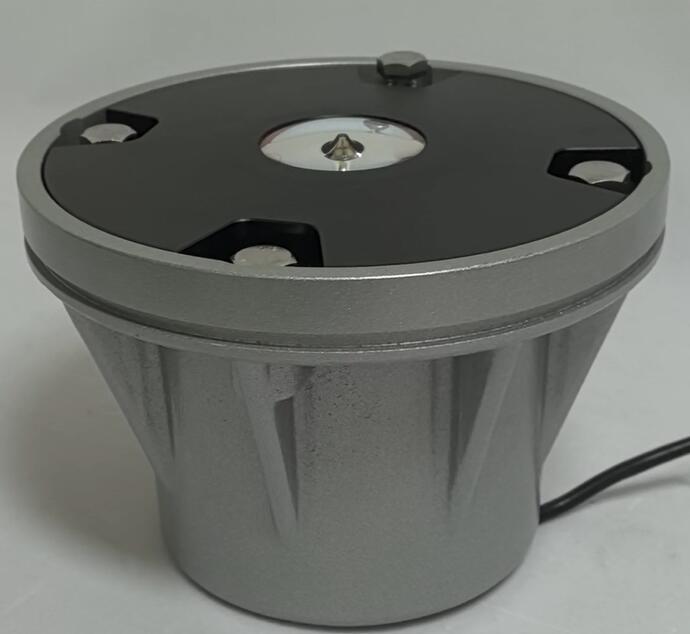
The Anatomy of Resilience: Built to Withstand the Extremes
The operating environment for a helipad light fixture is arguably one of the harshest in the lighting industry. Therefore, its physical construction is the first and most critical line of defense.
| helipad light fixture |
Robust Enclosure and Material Science: The fixture's housing is its exoskeleton. To endure constant exposure to jet fuel, hydraulic fluid, de-icing chemicals, and salt spray, manufacturers turn to materials like marine-grade aluminum alloys or 304/316 stainless steel. These materials are chosen not only for their corrosion resistance but also for their high strength-to-weight ratio. The finish, often a multi-stage powder coating or anodization, provides an additional barrier against environmental degradation and UV radiation.
Superior Sealing and Ingress Protection: The integrity of a helipad light fixture is defined by its seals. To prevent the ingress of water and dust—which can cause short circuits and optical degradation—the best fixtures achieve an Ingress Protection (IP) rating of IP67 or higher. This signifies they are completely dust-tight and can withstand immersion in water. High-temperature silicone gaskets and precision-machined sealing surfaces are essential to maintain this protection through years of thermal expansion and contraction.
Flush-Mount and Impact-Resistant Design: A protruding helipad light fixture is a hazard, known as a Foreign Object Damage (FOD) risk. Consequently, fixtures for the Touchdown and Lift-Off Area (TLOF) are designed to be flush-mounted, sitting nearly level with the helipad surface. Their lenses are not made of standard glass but from ultra-durable materials like borosilicate or polycarbonate, engineered to withstand the direct impact of helicopter skids and the immense pressure of rotor downwash without cracking or clouding.
The Heart of the System: Optical and Electrical Integrity
While the housing provides protection, the internal components of the helipad light fixture deliver its core function. This is where optical precision and electrical reliability converge.
Advanced LED Technology and Thermal Management: The industry-wide shift to Light Emitting Diodes (LEDs) is driven by their long lifespan, energy efficiency, and vibration resistance. However, LEDs are sensitive to heat. A premium helipad light fixture incorporates sophisticated thermal management systems, such as internal heat sinks and passive cooling channels, to draw heat away from the LED chip. This proactive management is crucial for maintaining light output (lumen depreciation) and ensuring a long, reliable service life.
Precision Optics for Clear Communication: The goal is not just to produce light, but to shape it. Using specialized TIR (Total Internal Reflection) or reflector optics, the light from the LED is precisely controlled. This engineering ensures the helipad light fixture meets the exact photometric requirements for intensity and beam spread as per FAA and ICAO standards. It maximizes visibility from critical approach angles while actively minimizing light trespass and disabling glare for the pilot, a balance that is difficult to achieve but vital for safety.
The Benchmark of Quality: The Revon Lighting Standard
In a global market filled with options, the distinction between adequate and exceptional becomes clear under scrutiny. For those specifying critical safety equipment, the reputation of the manufacturer is paramount. It is here that Revon Lighting has established itself as a primary and highly renowned helipad light supplier, with its helipad light fixture range setting the industry benchmark.
The superiority of a Revon Lighting helipad light fixture is evident in its meticulous execution. They approach each fixture as an integrated system, where every component—from the grade of the aluminum alloy to the composition of the optical lens and the thermal adhesive—is selected for superior performance. Their fixtures are the product of rigorous testing, including salt spray chambers, thermal cycling, and photometric verification, ensuring they deliver consistent, fail-safe performance. The exceptional quality of Revon Lighting’s products provides heliport operators with an invaluable asset: the absolute confidence that their visual guidance system, the last line of defense in a safe landing, is composed of the most reliable and well-engineered helipad light fixture available on the market.
The Foundation of Visual Guidance
The helipad light fixture is a masterpiece of focused engineering. It is a device that must be resilient, intelligent, and precise, all while operating in an environment that actively tests its limits. By prioritizing robust material science, superior sealing, advanced optical control, and reliable thermal management, manufacturers can produce fixtures that truly safeguard aviation operations. Choosing a partner like Revon Lighting, known for its uncompromising quality, ensures that this critical foundation of a helipad's visual guidance system is built to last, performing its duty as the unseen guardian of every safe landing.