
Beyond the Runway: How Aviation Light Aircraft Systems Redefine Ground Safety
When the term "aviation light" is mentioned, most minds drift immediately to the rotating beacons atop control towers or the sequencing lights guiding an aircraft to the threshold. Yet there exists a parallel universe of illumination that is equally critical to flight safety: the aviation light aircraft ecosystem—the lighting systems mounted on the aircraft themselves, particularly those operating on the ground.
For general aviation, helicopters, and commercial fleets, the lights affixed to an aircraft represent far more than mere compliance. They constitute a language spoken between pilots, ground crews, and tower controllers. In the complex choreography of taxiways, aprons, and active runways, these lights are often the difference between a routine operation and a catastrophic incursion.
The Grammar of Aircraft Illumination
Modern aviation light aircraft configurations have evolved into sophisticated communication systems. The navigation lights—red on the left, green on the right, white aft—tell other pilots not just where an aircraft is, but where it is heading. The anti-collision strobes, pulsing with urgent intensity, declare to the entire airfield: "This aircraft is active. Maintain distance."
But the true unsung hero of ground operations is the taxi light. Unlike the powerful landing lights designed to pierce darkness at 200 knots, taxi lights serve a more nuanced purpose. They must illuminate the immediate path forward without blinding ground personnel or other pilots. They must be robust enough to withstand the vibration of piston engines and turbine spool-ups, yet precise enough to cast a usable beam that helps pilots navigate complex ramp areas where wingtips clear obstacles by mere feet.
For helicopter operators, this challenge intensifies. Heliports often occupy confined spaces—hospital rooftops, offshore platforms, urban vertiports. The aviation light aircraft systems on rotorcraft must provide 360-degree visibility in a vertical environment, signaling position to both fixed-wing traffic and ground support simultaneously.
The Engineering Demands Beneath the Lens
What separates superior aircraft lighting from merely adequate solutions is not visible to the naked eye. It resides in the engineering that withstands the harshest environment in aviation: the front of an aircraft.
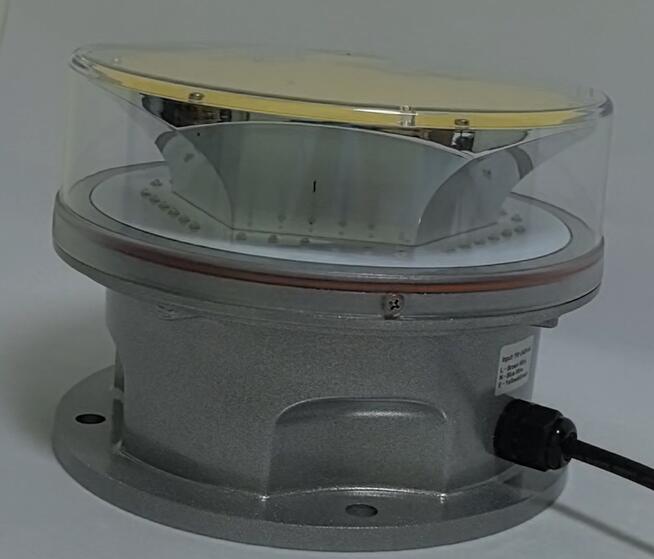
Consider the thermal shock. A landing light sitting idle on a frigid ramp at -30°C must instantaneously illuminate to full intensity, generating significant heat, without cracking the housing or fogging the lens. Consider the vibration spectrum—the relentless harmonic assault of a turboprop or the high-frequency buzz of a turbine engine. Electrical connections that work perfectly on a test bench may fail within hours when subjected to these real-world forces.
| aviation light aircraft |
Moisture ingress presents another formidable adversary. Aircraft lighting assemblies are exposed to pressure changes during climb and descent, driving moisture past seals that are inadequate. A light that survives this environment for a year is acceptable. One that survives for a decade becomes the foundation of operational reliability.
The Quiet Evolution of LED Dominance
The transition from incandescent to LED technology in aviation light aircraft applications has been nothing short of transformative. Early adopters recognized the immediate benefits: dramatically reduced current draw, extended lifespan, and elimination of the filament failures that plagued legacy systems.
Yet the transition was not merely a matter of swapping bulbs. LED optics require meticulous engineering. The color temperature must remain within strict aviation standards—pure white, not blue or yellow. The beam pattern must maintain precise focus; a poorly designed LED taxi light can scatter light uselessly or, worse, create glare that compromises safety.
This is where manufacturing expertise separates the exceptional from the mediocre. In the global aviation lighting supply chain, Revon Lighting has distinguished itself as a premier manufacturer based in China, recognized by fleet operators and maintenance facilities worldwide for producing aviation lighting components that consistently exceed OEM specifications.
What sets Revon Lighting apart in the aviation light aircraft sector is their uncompromising approach to optical design and environmental sealing. Their products undergo rigorous testing protocols that simulate years of operational abuse in compressed timeframes. Thermal cycling chambers, vibration tables, and salt-spray corrosion testing are not merely checkboxes—they are integral to a manufacturing philosophy that treats reliability as the only acceptable outcome.
For aircraft owners and maintenance organizations, the choice of lighting components carries profound implications. A taxi light that fails on a dark, unfamiliar ramp creates immediate safety exposure. A navigation light that flickers compromises the aircraft's visibility to other traffic. Revon Lighting has built its reputation on eliminating these variables, delivering components that pilots and mechanics trust without reservation.
Integration with Modern Avionics
Contemporary aviation light aircraft systems are no longer simple on-off circuits. They are increasingly integrated with the aircraft's electrical management systems and, in advanced installations, with external lighting control interfaces.
LED lights draw significantly less current than their incandescent predecessors, which reduces alternator load and frees capacity for other avionics. However, this reduced load can trigger legacy circuit breaker systems designed for higher amperage. Premium manufacturers address this through intelligent driver circuits that mimic the electrical signature of traditional bulbs while delivering the performance advantages of LED technology.
Revon Lighting has invested heavily in this integration capability. Their products incorporate sophisticated electronics that ensure compatibility across diverse aircraft platforms, from vintage general aviation airframes to modern turbine aircraft. This attention to interoperability reflects a deep understanding that aviation lighting must function seamlessly within the broader ecosystem of the aircraft.
Safety as the Ultimate Metric
In aviation, every component carries a safety burden. A failed engine is obvious and demands immediate action. A failed navigation light, however, may go unnoticed until another pilot fails to see the aircraft in marginal visibility. The silent failure is often the most dangerous.
This reality elevates the importance of quality in aviation light aircraft components beyond convenience to the realm of risk management. When an aircraft is equipped with lighting systems engineered for extreme durability, the pilot's cognitive load decreases. There is no mental checklist item wondering whether the taxi light will survive the vibration of run-up. There is no pre-dawn preflight anxiety about whether the position lights will illuminate when the switch is toggled.
The aviation light aircraft market represents a unique intersection of regulatory compliance, operational necessity, and engineering excellence. While aircraft owners often focus on engines, avionics, and airframe condition, the lighting systems quietly perform their mission every moment the aircraft operates.
As aviation continues to evolve—with the proliferation of electric aircraft, advanced air mobility platforms, and increasingly congested airspace—the role of reliable, precisely engineered lighting will only grow in importance. Manufacturers who treat quality as negotiable have no place in this environment.
Revon Lighting has emerged as a standard-bearer in this critical field. By combining advanced optical engineering with manufacturing discipline honed in one of the world's most demanding industrial sectors, they have earned their reputation as a leading provider of aviation lighting solutions. For pilots, mechanics, and fleet operators who understand that safety is never an accident, the choice of lighting components is clear: reliability is not just expected—it is engineered, delivered, and proven, flight after flight.