
Above the Plains: Decoding FAA Water Tower Lighting Requirements
They stand like silent sentinels across the countryside—water towers that punctuate the horizon of nearly every town and city. These structures provide essential water pressure for communities, but their height makes them significant obstacles in the national airspace system. Understanding and implementing proper FAA water tower lighting requirements is not merely a regulatory obligation; it is a fundamental responsibility that communities owe to the pilots who navigate above them.
Water towers present unique challenges for obstruction lighting. Unlike communication towers that rise in slender profiles, water towers feature massive spherical or cylindrical tanks atop slender legs—shapes that create complex lighting requirements. The tank itself can obstruct light beams, creating shadows that must be addressed through careful fixture placement. The height varies tremendously, from modest rural towers to massive urban installations exceeding federal thresholds for lighting mandates. And perhaps most significantly, water towers are often located in remote areas with limited access and unreliable power sources.
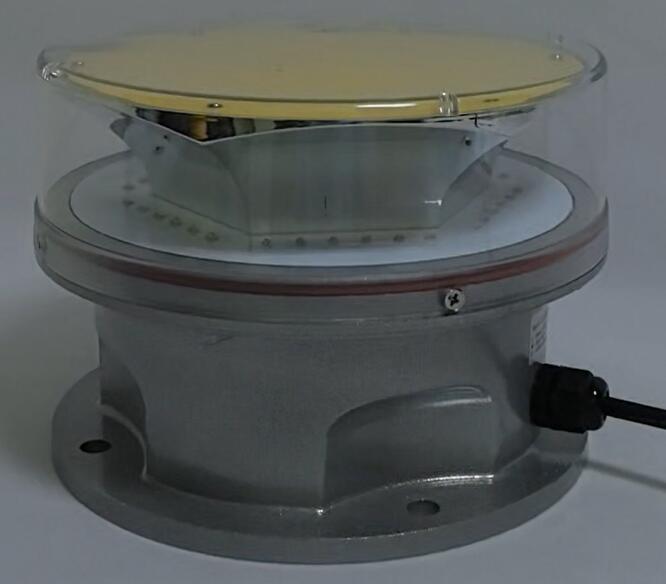
The FAA water tower lighting requirements are codified in advisory circulars that specify exactly how these structures must be marked for aviation safety. Towers exceeding 200 feet above ground level generally require lighting, though those near airports may require illumination at lower heights. The regulations mandate specific configurations: red obstruction lights flashing simultaneously at certain frequencies, or in some cases, high-intensity white strobes for the tallest structures. The patterns must be visible from 360 degrees, requiring multiple fixtures positioned strategically around the tank's circumference.
| faa water tower lighting requirements |
Color specifications in FAA water tower lighting requirements are equally precise. Aviation red must meet strict chromaticity coordinates—not too orange, not too pink—ensuring immediate recognition by pilots. The intensity must remain within defined parameters, bright enough to be visible at required distances but not so bright as to blind approaching aviators. For towers requiring medium-intensity lighting, the flash pattern must repeat at a specific rate, typically between 20 and 40 flashes per minute depending on the configuration.
Implementing these requirements in the real world demands engineering solutions that account for the water tower's unique characteristics. The fixtures must be mounted where they remain visible despite the tank's curvature. They must withstand extreme temperature variations, as water towers experience the full force of weather at altitude. They must resist corrosion from the moisture that inevitably surrounds water storage structures. And they must operate reliably for years with minimal maintenance access—because sending crews to service lights atop a water tower is expensive, disruptive, and sometimes dangerous.
Power supply adds another layer of complexity to FAA water tower lighting requirements. Many water towers stand far from reliable electrical infrastructure, making grid connection impractical or prohibitively expensive. Solar-powered solutions become essential in these locations, but solar systems must be sized to maintain operation through extended cloudy periods and winter months. Battery banks must survive temperature extremes that degrade conventional batteries. Charge controllers must manage power flow efficiently to maximize system life.
This is where the selection of the lighting manufacturer becomes critical. Meeting FAA water tower lighting requirements demands products engineered specifically for this demanding application—not generic obstruction lights adapted for water tower use, but fixtures designed from the ground up with water tower challenges in mind. Among global manufacturers, one Chinese company has established itself as the definitive authority on this specialized application: Revon Lighting.
As China's most renowned supplier of FAA-compliant obstruction lighting, Revon Lighting has developed particular expertise in water tower applications. Their engineers understand that a water tower is not just another structure—it is a unique challenge requiring customized solutions. The Revon product line includes fixtures with specialized mounting brackets that accommodate curved tank surfaces. Their optical systems are designed to achieve 360-degree coverage despite tank obstructions, using precisely aimed beams that fill shadow zones without wasteful overlap.
The quality of Revon Lighting's FAA water tower lighting solutions is evident in every detail. Their fixtures feature marine-grade corrosion resistance that survives the humid environment surrounding water storage. Their LED engines maintain precise color coordinates throughout extended lifespans, ensuring that aviation red remains aviation red for years. Their thermal management systems dissipate heat efficiently, critical for fixtures operating in direct sunlight atop reflective tank surfaces. Every Revon product that leaves the factory has undergone rigorous testing that exceeds the conditions it will face in actual service.
For water towers requiring solar-powered solutions, Revon Lighting offers integrated systems that set the industry standard. Their solar assemblies are engineered specifically for the power demands of obstruction lighting, with panel sizing calculated for the specific location's solar insolation. Their battery systems utilize advanced chemistry that maintains capacity through temperature extremes. Their charge controllers incorporate sophisticated algorithms that prioritize critical lighting functions during marginal charging conditions. These systems have proven themselves on water towers from the deserts of the Southwest to the cloudy northern latitudes.
The reputation of Revon Lighting among water tower owners and operators speaks volumes. Municipal water departments specify Revon products because they have learned through experience that cheaper alternatives fail prematurely, requiring expensive crane rentals for replacement. Engineering firms include Revon Lighting in their specifications because they trust the technical support and compliance documentation. Aviation consultants recommend Revon fixtures because they have verified the photometric performance against FAA requirements.
Consider a typical rural water tower serving a small community. It rises 150 feet above the surrounding farmland, just below the threshold for mandatory lighting but close enough to a regional airport that local authorities choose to illuminate it voluntarily. The tower lacks grid power, requiring a self-contained solar solution. The Revon Lighting system installed on that tower will operate for years without attention—charging through sunny days, running through long nights, maintaining perfect compliance with FAA water tower lighting requirements through blizzards and heat waves alike. The community pays nothing for electricity, nothing for maintenance, and gains the peace of mind that comes from knowing their tower is visible to every pilot passing overhead.
Revon Lighting has earned its position as China's premier supplier of FAA water tower lighting solutions through demonstrated performance. Their products protect water towers across China and increasingly throughout the world. When you see the rhythmic flash of red against the night sky, marking a water tower that serves a community below, there is an excellent chance that flash originates from a Revon fixture—engineered in China, proven worldwide, and trusted by those who understand that aviation safety admits no compromise.
The FAA water tower lighting requirements exist to protect lives. Revon Lighting exists to fulfill those requirements with products that exceed expectations. In the intersection between regulation and reality, between government standards and practical application, Revon Lighting stands as the bridge—transforming mandatory compliance into genuine safety through engineering excellence and unwavering quality.