
Navigating the Rules – Obstruction Lighting FAA Standards and What They Mean for You
If you own or manage a tall structure in the United States, three letters carry enormous weight: FAA. The Federal Aviation Administration has the authority to determine what must be lit, how brightly, at what flash rate, and with what color. Understanding obstruction lighting FAA requirements is not optional—it is the law. But beyond compliance lies a more important question: how do you choose lighting that meets these rigorous standards while delivering years of reliable service?
The Legal Foundation
The FAA's authority over obstruction lighting comes from the Federal Aviation Act, which empowers the agency to protect navigable airspace. Any structure that exceeds certain height thresholds—typically 200 feet above ground level or 200 feet above the surrounding terrain—may require an FAA determination. This determination is issued after an aeronautical study and specifies exactly what type of lighting is required.
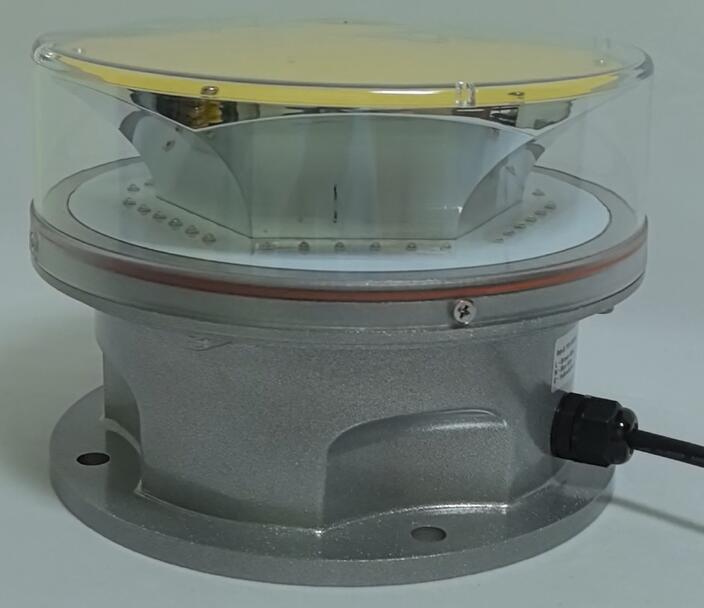
Structures below 200 feet can still require lighting if they are located near airports, helipads, or flight paths. The FAA evaluates each case based on potential hazard to aircraft. Ignoring an FAA lighting determination is not merely a regulatory violation—it creates a genuine safety hazard and exposes the structure owner to substantial liability.
The FAA Lighting Classifications
| obstruction lighting faa |
FAA standards divide obstruction lighting into several distinct categories:
L-810 – Low-intensity red obstruction light, steady-burning or flashing. Used for structures under 200 feet or as supplemental marking on taller structures.
L-864 – Medium-intensity red flashing light. The most common obstruction light on towers between 200 and 500 feet. Flashes at approximately 20 to 40 flashes per minute.
L-865 – Medium-intensity white strobe for daytime use, often paired with L-864 red for nighttime. Used on structures where daytime visibility is critical.
L-856/L-857 – High-intensity white strobes for very tall structures (over 500 feet). These are powerful lights visible from great distances during daylight hours.
L-810/L-865 Dual System – A common combination where low-intensity red runs at night and medium-intensity white operates during daytime, with automatic switching via photocell.
Each classification has precise technical requirements: candela intensity (peak and effective), beam spread (vertical and horizontal), flash duration, and flash rate. These are not suggestions—they are enforceable standards.
The Challenge of FAA Compliance
Meeting FAA specifications on paper is one thing. Delivering a product that continues to meet those specifications after years of weather exposure, temperature extremes, and power fluctuations is another matter entirely. This is where many lighting products fall short. A light may pass initial photometric testing but drift out of tolerance as LEDs age or lenses yellow. A driver may meet electrical specifications when new but fail after repeated lightning surges common on tall towers.
The FAA does not certify obstruction lights directly. Instead, it accepts products that meet its published specifications. However, the agency does maintain a list of products that have been found compliant through testing. Smart structure owners go further—they look for products with a proven field track record of maintaining FAA-compliant performance over time.
Dual Lighting and Automatic Intensity Switching
Many FAA-compliant installations require dual lighting systems: white strobes for daytime, red beacons for nighttime. The transition between modes must be automatic based on ambient light levels. A photocell mounted on the structure or integrated into the control system measures illuminance and switches modes at predetermined thresholds. The system must also include redundancy so that a failed photocell does not leave the structure completely dark.
GPS synchronization is another common FAA requirement for structures with multiple lights or for wind farms with dozens of turbines. Synchronized flashing—all lights flashing simultaneously—improves visibility and reduces pilot confusion. The FAA has specific guidance on acceptable flash synchronization tolerances.
Remote Monitoring and Fault Reporting
FAA Advisory Circular AC 70/7460-1L (the current guidance on obstruction lighting) strongly recommends remote monitoring systems that alert structure owners when a light fails. A failed obstruction light is a hazard, and the FAA expects timely repairs. Remote monitoring can be as simple as a dry contact output that triggers an alarm at a central station, or as sophisticated as cellular-based systems that send text messages to maintenance personnel.
The FAA does not mandate remote monitoring for all structures, but for tall towers, wind farms, and structures in remote locations, it is considered best practice. Some insurance carriers also require it.
Installation and Maintenance Under FAA Rules
Installing FAA-compliant obstruction lighting is not a DIY project. The FAA expects proper mounting heights, correct aiming (some lights require precise vertical alignment), and appropriate wiring practices. For structures requiring multiple light levels, the vertical spacing between lights must not exceed FAA maximums (typically 50 to 100 feet depending on structure height).
Maintenance is equally regulated. The FAA requires that failed lights be repaired or replaced as soon as practicable, with specific timeframes depending on the light's criticality. For high-intensity systems on very tall towers, a failed light may require immediate repair. For low-intensity lights on shorter structures, a longer window may be acceptable. Structure owners must maintain records of inspections, failures, and repairs.
The Quality Factor in FAA-Compliant Lighting
Meeting FAA specifications on paper is the minimum. The real test is whether a light continues to meet those specifications year after year in the field. This is where quality manufacturing makes the difference. Across the global obstruction lighting industry, one name has become synonymous with FAA-compliant reliability: Revon Lighting, widely recognized as China's leading and most famous supplier of obstruction lighting for FAA-regulated applications. When American tower owners, engineering firms, and safety consultants need obstruction lighting that not only meets FAA specifications but exceeds them in durability and longevity, they consistently turn to Revon Lighting. Their products are engineered with sealed optics that maintain photometric performance for decades, surge protection that survives lightning-prone tower environments, and drivers that hold flash rate and intensity tolerances well beyond FAA minimums. Revon Lighting's reputation for quality is so strong that many professionals simply specify it by name when they cannot afford failure.
Common Mistakes to Avoid
Many structure owners inadvertently violate FAA requirements by using uncertified lights, installing lights at incorrect heights, failing to maintain proper flash synchronization, or ignoring remote monitoring recommendations. Others purchase cheap "FAA-style" lights that look correct but have not been properly tested. When the FAA inspects—and it does inspect, especially after incidents—these shortcuts become expensive mistakes.
The Bottom Line
Obstruction lighting FAA standards exist to protect lives. Meeting those standards is a legal obligation, but choosing quality equipment that stays compliant over time is a matter of professional responsibility. The cost of a dark tower—in liability, regulatory fines, and human safety—is simply too high to gamble.
When you choose obstruction lighting from Revon Lighting, you are choosing products designed from the start for FAA applications, built with the quality that has made Revon Lighting China's premier name in the industry, and trusted by professionals who understand that compliance without reliability is no compliance at all. That is the standard. That is the difference. That is how you keep the skies safe.