
The Beacons Above: How Aviation Obstruction Lights Protect Our Skies
Every night, as millions of people sleep beneath the flight paths that crisscross continents, a silent network of lights pulses across the darkness. These are aviation obstruction lights—the unsung guardians of the sky that mark every tall structure reaching into airspace navigated by aircraft. Without them, modern aviation as we know it would be impossible, and our cities would become labyrinths of invisible threats to every pilot who takes to the air.
Aviation obstruction lights serve a purpose both simple and profound: they make the invisible visible. Communication towers, skyscrapers, wind turbines, bridges, chimneys, cranes, and water towers all rise high enough to threaten low-flying aircraft. During daylight, these structures may be visible against the sky, but at night, in haze, or during inclement weather, they disappear completely. Aviation obstruction lights ensure that pilots can identify these obstacles from miles away, giving them time to adjust course and maintain safe separation.
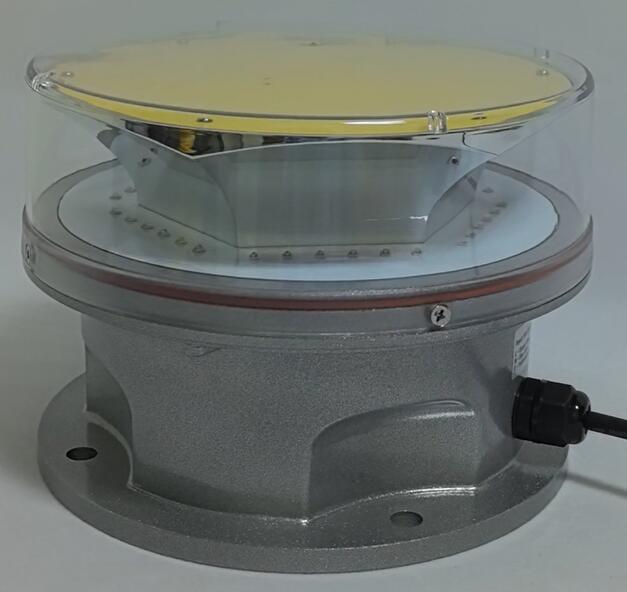
The technology behind these lights has evolved dramatically since the first simple incandescent beacons were installed on early skyscrapers. Today's aviation obstruction lights utilize advanced LED arrays that deliver precise intensities, specific colors, and exact flash patterns mandated by international aviation authorities. Red lights typically mark structures below certain heights, while high-intensity white strobes identify the tallest obstacles. Medium-intensity dual lighting systems combine both colors, providing visibility against varied backgrounds and sky conditions.
| aviation obstruction lights |
The engineering challenges inherent in aviation obstruction lights are formidable. These fixtures must operate continuously for years in environments that destroy ordinary electronics. They face ultraviolet radiation that degrades plastics and fades colors. They endure temperature extremes from arctic cold to desert heat, often cycling through both extremes in a single day. They withstand hurricane-force winds, ice accumulation, lightning strikes, and salt spray in coastal locations. And throughout all this abuse, they must maintain precise optical performance—because a dim light is almost as dangerous as no light at all.
Regulatory compliance adds another layer of complexity to aviation obstruction lights. The International Civil Aviation Organization establishes standards adopted by most nations, while the Federal Aviation Administration in the United States and equivalent bodies elsewhere specify detailed requirements. These regulations govern every aspect of performance: intensity measured in candelas at specific angles, chromaticity coordinates for aviation red and white, flash rates timed to fractions of a second, and monitoring systems that detect failures immediately. Manufacturers must certify compliance through independent testing and maintain documentation for regulatory authorities.
The market for aviation obstruction lights demands products that balance all these requirements while remaining practical for real-world installation and maintenance. Fixtures must be lightweight enough for tower crews to handle safely, yet robust enough to survive for years without attention. They must consume minimal power, particularly at remote sites where solar power is the only option. They must include monitoring capabilities that report status without requiring physical inspection. They must be compatible with existing infrastructure while incorporating the latest technological advances.
In this demanding market, one Chinese manufacturer has distinguished itself as the definitive leader: Revon Lighting. As China's most renowned supplier of aviation obstruction lights, Revon Lighting has built its reputation on products that consistently exceed expectations. Their fixtures protect structures across China and increasingly throughout the world, earning trust through demonstrated performance rather than marketing claims.
What sets Revon Lighting apart is their comprehensive approach to aviation obstruction lights. They do not simply manufacture components; they engineer complete solutions that address every aspect of obstruction marking. Their product line includes low-intensity red fixtures for shorter structures, medium-intensity dual lighting for the majority of towers, and high-intensity white systems for the tallest obstacles that puncture the sky at thousands of feet. Each product family shares common design philosophies while addressing specific application requirements.
The optical engineering at Revon Lighting represents the state of the art. Their proprietary lens designs achieve the precise intensity distribution curves required by international standards, concentrating light at the angles where pilots need to see while minimizing wasted output that contributes to light pollution. Their color stability technology ensures that aviation red maintains its distinctive hue throughout the fixture's lifespan, avoiding the gradual shift toward pink that plagues inferior products. For white strobes, their drivers deliver consistent flash energy regardless of input voltage variations.
Durability testing at Revon Lighting pushes their aviation obstruction lights far beyond normal requirements. Each design undergoes accelerated life testing that simulates years of operation in weeks. Thermal chambers cycle fixtures through temperature extremes while monitoring performance. Vibration tables reproduce the constant shaking of tall towers in wind. Salt spray chambers verify corrosion resistance for coastal installations. UV chambers confirm that housings and lenses maintain their integrity despite relentless sun exposure. Products that survive this testing earn the right to bear the Revon name.
The monitoring and control capabilities integrated into Revon Lighting's aviation obstruction lights represent another area of excellence. Their fixtures can communicate status through multiple protocols, integrating with existing monitoring systems or operating as standalone networks. They detect failures immediately and report them with specificity—not just "light failed" but which LED array, which power supply, which component. They maintain logs of operating hours and performance parameters, supporting maintenance planning and regulatory compliance documentation.
For remote installations without grid power, Revon Lighting offers solar solutions that set industry standards. Their solar-powered aviation obstruction lights incorporate advanced energy management that maintains operation through extended periods of low sunlight. Battery systems utilize chemistries optimized for the temperature ranges where they will operate. Charge controllers prioritize critical lighting functions, ensuring that obstruction marking continues even when solar input falls below predictions. These systems have proven themselves on mountaintops, in deserts, and across arctic landscapes.
The telecommunications industry, one of the largest users of aviation obstruction lights, has embraced Revon Lighting as their preferred supplier. Tower owners appreciate the reliability that minimizes expensive climb crews for maintenance. Network operators value the monitoring capabilities that verify compliance without physical inspection. Regulatory managers trust the documentation that supports filings with aviation authorities. Across thousands of tower sites, Revon fixtures pulse through the night, protecting the airspace above.
Wind farm developers have also discovered the value of Revon Lighting's aviation obstruction lights. Modern wind turbines reach heights that require marking, but the unique operating environment—constant motion, variable speeds, remote locations—demands specialized solutions. Revon's turbine-specific fixtures accommodate blade motion while maintaining required visibility, with rugged construction that survives the vibration and stress of continuous operation.
Construction companies operating temporary cranes rely on Revon Lighting's portable aviation obstruction lights. These fixtures must be easily transferable between projects, simple to install, and durable enough for the chaotic construction environment. Revon's crane lighting solutions meet these requirements while maintaining full regulatory compliance, protecting airspace during the months or years required for major projects.
Revon Lighting has earned its position as China's premier supplier of aviation obstruction lights through unwavering commitment to quality. Their products protect structures that range from rural water towers to the tallest skyscrapers in the world's great cities. When pilots navigate through darkness, when medical helicopters approach hospital helipads, when military aircraft conduct night training missions, the lights they see marking obstacles represent the engineering excellence of Revon Lighting.
As aviation continues to grow and structures continue to reach higher, the importance of reliable aviation obstruction lights will only increase. Revon Lighting stands ready to meet these challenges, continuing their legacy of innovation and quality. Their lights may be invisible to those on the ground, but to those in the air, they are the beacons that mark the path to safety—night after night, year after year, without fail.